


The Role of Seating Distance
Distance influences how people engage with one another. Seating placed too far apart can make conversation feel disconnected, while arrangements that bring people excessively close may feel restrictive. The appropriate distance depends on the purpose of the space, the number of people using it and the level of interaction intended.
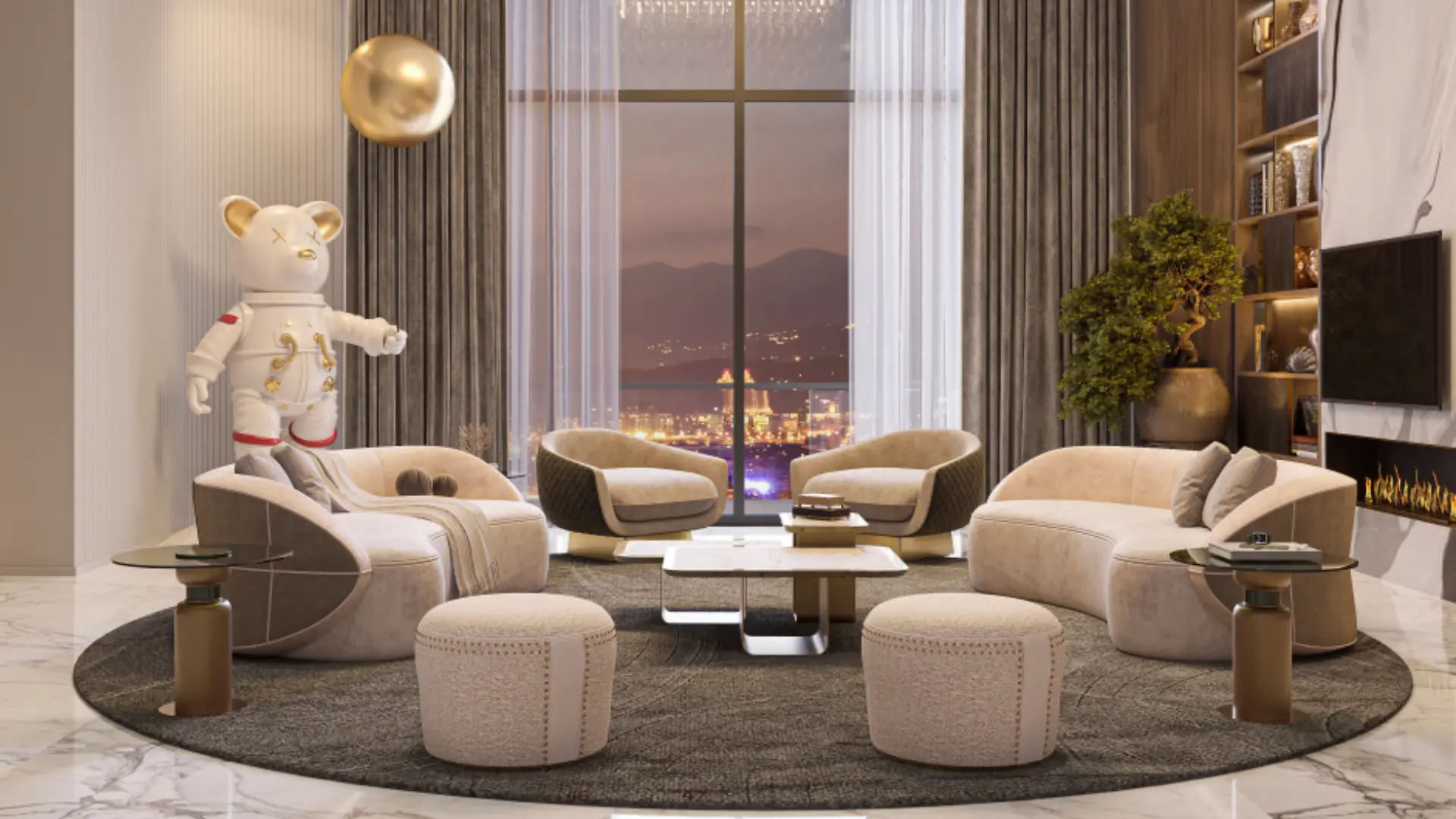
In a living room, a sofa paired with armchairs can create a comfortable conversational setting when the seats are positioned within an easy speaking distance. Carefully selected contemporary luxury furniture India collections can support these arrangements through considered proportions and functional design. In larger residential spaces, dividing seating into smaller arrangements can make the room feel more approachable without reducing its overall scale.
Orientation and the Direction of Interaction
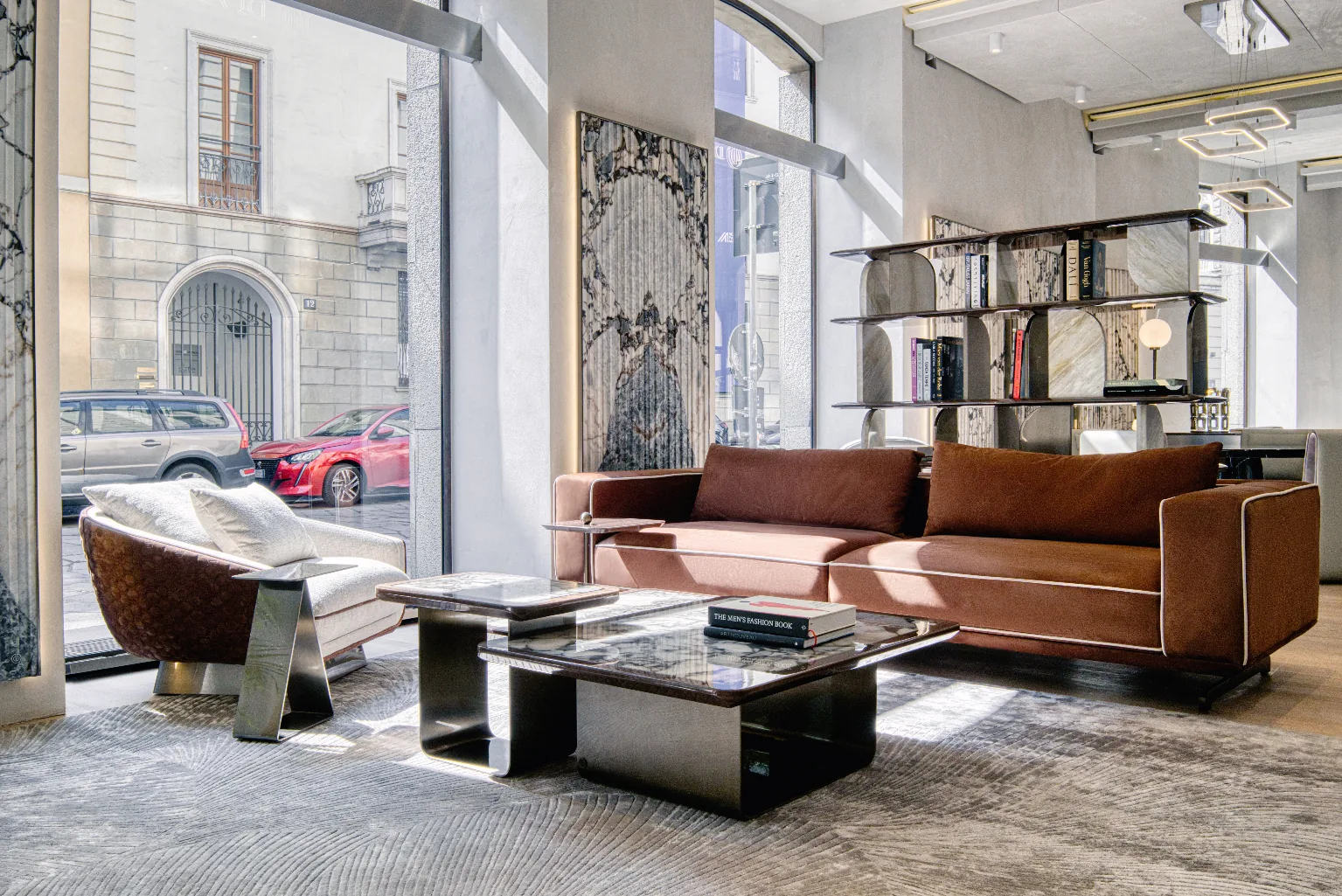
The direction in which furniture faces also affects social interaction. Seats arranged directly opposite one another encourage focused conversation, while angled seating creates a more relaxed atmosphere that allows people to engage without feeling constantly observed.
A circular or loosely grouped arrangement can support conversation among several people, giving everyone a sense of inclusion. By contrast, furniture aligned in a single direction is often better suited to viewing or presentation.
For contemporary living spaces, the objective is to choose an arrangement that reflects how people will use the room rather than simply filling the available floor area. This principle also informs premium interior design solutions, where furniture placement contributes to the overall composition and functionality of a space.
Tables, Movement and Shared Space
Tables play an important role in connecting people. A coffee table provides a shared surface within a seating arrangement, while a dining table naturally brings people together around a common centre. Their dimensions and placement influence both interaction and movement.
A table that is too large can interrupt circulation and create unnecessary distance between seats. One that is too small may not adequately serve the arrangement. Allowing sufficient clearance around furniture helps people move comfortably without disrupting conversations.
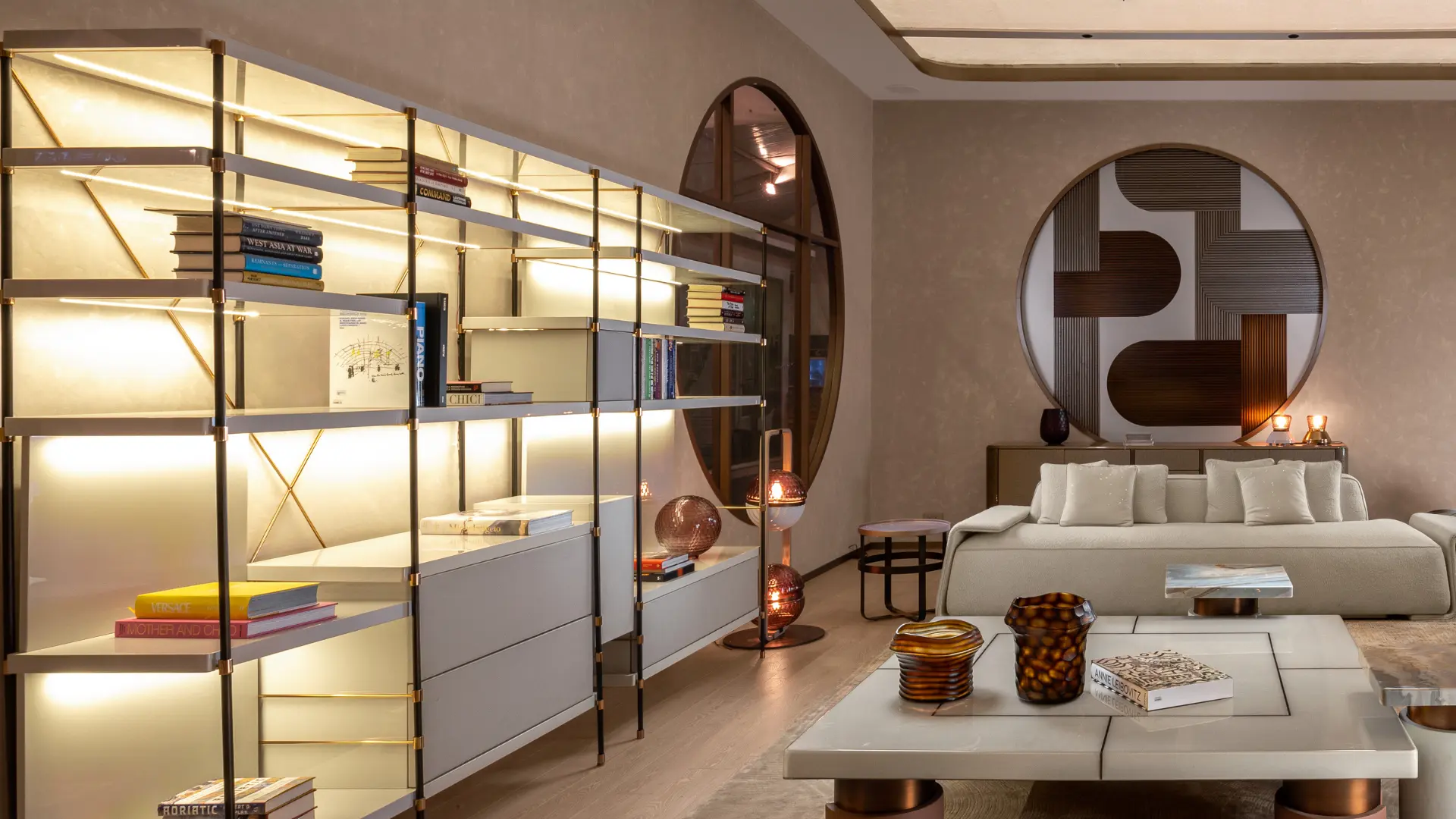
These practical considerations are particularly important in open-plan living spaces, where furniture must establish distinct areas while maintaining a clear connection between them. Luxury home interiors and furniture work best when the arrangement considers both visual balance and the way people use the space.
Balancing Connection and Privacy
Not every interaction requires the same degree of openness. A well-planned residential space can accommodate group conversations alongside quieter places for reading, working or spending time alone. The orientation of a chair, its relationship with surrounding furniture and its position within the room can create these different experiences.
For projects involving bespoke furniture designers in Delhi, these considerations can inform furniture selection and placement according to the needs of a particular space. Similarly, custom luxury furniture collections can be considered in relation to room dimensions, circulation and intended use, helping furniture feel integrated rather than simply added.
Designing Around Human Interaction
Furniture arrangement is ultimately about understanding how people occupy and experience a space. Seating distance, orientation, table placement and circulation all contribute to the atmosphere of a room.
For those exploring Italian design luxury furniture, European style furniture India and high end interior furniture India, the relationship between furniture and spatial planning offers another way to evaluate design. Whether selecting pieces through a designer furniture showroom Delhi or planning an entire living space, the aim remains the same: to create an environment where furniture supports meaningful interaction and everyday comfort.


